



This is our first guest contribution from prolific scholar on Palestine Mujamma Haraket. You can read his writing and translations focused on the Palestinian resistance on his Substack page, and follow him on X @MujammaHaraket.
Subscribe to Vocal Politics to receive more long-form political analysis, our weekly newsletter, exclusive interviews, and more:
Introduction
Gaining clarity on the motivations of Tufan al-Aqsa requires assiduously engaging with the witness accounts and political history of those within the Hamas movement who spearheaded it. Though myriad explications—some tendentious and others more fastidious—abound, this methodology, which descries witness accounts, has, unfortunately, been broadly sidelined—including by political scientists and historians whose area of specialization includes Palestinian political history. It should come as no surprise, then, that the most assiduous analysis whose engagement proves to enjoy probative value as to understanding Tufan has been produced by the likes of Khaled al-Hroub, arguably the most exacting scholar of Hamas publishing in the English language.1 Reviewing the full breadth of the documents illuminating the impetus behind Tufan al-Aqsa would amount to a book-length project. Instead, this much more modest essay will home in on the critical importance of the prisoners’ issue, which it will argue foregrounded the operation.
As a preliminary point, it should be noted that the Hamas Political Bureau published a two-part document, Our Narrative: Operation al-Aqsa Flood, in which it engages precisely with this question.2 The extensive document’s first half, deserving of a more full-fledged analysis than this summary review can admit, adumbrates several reasons in its inaugural “Why Operation al-Aqsa Flood?” section, including the “unjust air, sea, and land blockade imposed on the Gaza Strip over 17 years,” exacerbating land seizure and expropriation, de facto and de jure Judaization of traditional Muslim (and Christian) holy sites, apartheid policies, a lack of security, the occupation military’s brutal force in the West Bank and during the various and manifold operations in Gaza, the unimpeded “‘peace settlement process’” championed by Arab countries despite “‘Israel’ systematically” destroying “every possibility to establish the Palestinian state,” and “[t]he failure of the international community and the complicit[y] of superpowers to prevent the establishment of a Palestinian state.”3 One of the crucial points that the document turns and continually returns to, however, is the prisoners’ file, writing that:
Operation Al-Aqsa Flood on Oct. 7 targeted the Israeli military sites, and sought to arrest the enemy’s soldiers to pressure on the Israeli authorities to release the thousands of Palestinians held in Israeli jails through a prisoners exchange deal.4
Insofar as the issue of the international community’s neglect is concerned, the Political Bureau also relates this to the issue of the Palestinian prisoners held captive by the occupation, observing that:
These countries show no interest towards the continuation of the unjust blockade on millions of Palestinians in Gaza, and also show no interest towards the thousands of Palestinian detainees in Israeli jails held under conditions where their basic rights are mostly denied.5
It is also true, as Izz al-Din al-Haddad and Huthayfa al-Kahlout (the former Abu Obeida) have separately argued, that Tufan al-Aqsa was a preemptive military operation; that is, though the planning for Tufan well preceded the final decision to execute, the timing was ultimately impelled by intelligence obtained by the resistance that the occupation planned to target the resistance, its leaders, and Gazan infrastructure.6 However, insofar as the operation’s character consisted in the capture of prisoners of war, whose telos was ultimately tied to the ulterior goal of a prisoner exchange, the prisoners’ file remains the nexus for making sense of Tufan al-Aqsa.
Read as a historical contrivance, Hamas’ use of capture-for-exchange has a rather long and notable history. Thus, before turning to the planning of Tufan proper, a summary review of this history will prove instructive.
A Brief History of Hamas’ Capture-for-Exchange Endeavors
A formative early incident preceding the movement’s foundation was the May 1985 Jibril Agreement, in which the PFLP-GC exchanged three Israeli soldiers for 1,150 prisoners, among them Sheikh Ahmad Yassin, who was the director of al-Mujamma al-Islami. Within the Palestinian-Muslim-Brotherhood-cum-Hamas military milieu, the strategy was thus augured. Ahmad Yassin and Salah Shehade assigned Muhammad al-Sharatha to form “Cell 101,” whose members captured occupation soldiers Avi Sasportas in February 1989 and Ilan Sa’don in May 1989. This was the first Hamas-linked military cell to make the capture of soldiers for the release of Palestinian prisoners an explicit operational task, although neither operation achieved the intended prisoner exchange.7 After the exposure of “Cell 101,” Muhammad al-Deif was imprisoned from 1989 to 1991; during those two years he and Salah Shehade agreed that, once released, al-Deif would establish a cell devoted to capturing soldiers.8


On 13 December 1992, Mahmoud Musa Issa, commander of an al-Quds Qassam cell, led the capture of Nissim Toledano, an occupation Border Police sergeant-major, to demand the release of Yassin, Hamas’ founding leader, but Toledano was eliminated without securing an exchange. The cell’s conditions required Yassin’s release “before a representative of the International Committee of the Red Cross and in the presence of the ambassadors of Egypt, France, Sweden and Turkey,” with a commitment not to re-arrest him and a ten-hour deadline.9 On 1 July 1993, Muhammad Ahmad Hasan al-Hindi and Salah Mustafa Uthman, both from Jabalia camp, joined Mahir Muhammad Hasan Abu Surur, from Aida camp near Bethlehem, in a bus-hostage operation in al-Quds.10 The fighters demanded Yassin’s release alongside dozens of Palestinian prisoners, but the occupation army’s assault ended the operation without an exchange, with two fighters martyred and the third wounded. In October 1994, a Qassam cell captured Nachshon Wachsman, an occupation soldier serving in the Golani Brigade, and held him in Bir Nabala near al-Quds. Jihad Yaghmur, a Hamas operative from East al-Quds, proposed the capture to negotiate for the “release of Hamas members sitting in Israeli prisons,” particularly Yassin, and took the plan to the Qassam command in Nablus, where he coordinated with Yahya Ayyash, the Qassam explosives engineer. Al-Deif, then Qassam’s commander in Gaza, coordinated the operation across Gaza and the West Bank with Salah Jadallah, a Qassam operative in Gaza, Ayyash and Yaghmur, and made his first public appearance in a recording announcing the capture. Under Ayyash’s plan, Yaghmur handled communications between Wachsman’s three guards and al-Deif, who was to “conduct the negotiations and monitor developments.”11 The cell demanded Yassin’s release alongside Palestinian women detainees and prisoners affiliated with Hamas, Palestinian Islamic Jihad, Fatah, the Popular Front for the Liberation of Palestine, the Democratic Front for the Liberation of Palestine, the Popular Front for the Liberation of Palestine–General Command and Hizbu’ llah. Wachsman died during the occupation army’s assault on the apartment on 14 October 1994, and no prisoners were released. The Qassam cell in Tzurif, near Hebron, captured occupation soldier Sharon Edri in September 1996, while another Qassam cell captured Sasson Nuriel, an al-Quds businessman whom it identified as a Shin Bet operative, on 21 September 2005, but Edri was eliminated and Nuriel was killed, and neither capture secured a prisoner exchange.
The “Meshal affair” only further cemented the successes that the prisoner exchange could evince. On 25 September 1997, Mossad agents poisoned Khaled Meshal, the head of Hamas’ Political Bureau, in Amman with a “chemically modified version of fentanyl,” identified in the formula subsequently supplied to Jordan as levofentanyl, but Jordan detained two of the agents. King Hussein of Jordan secured the poison’s formula and additional supplies of its antidote, Narcan, which Jordanian doctors were already administering to Meshal, and demanded Yassin’s release in return for the agents. Yassin was released on 1 October 1997 and flown to Amman before returning to Gaza.1213
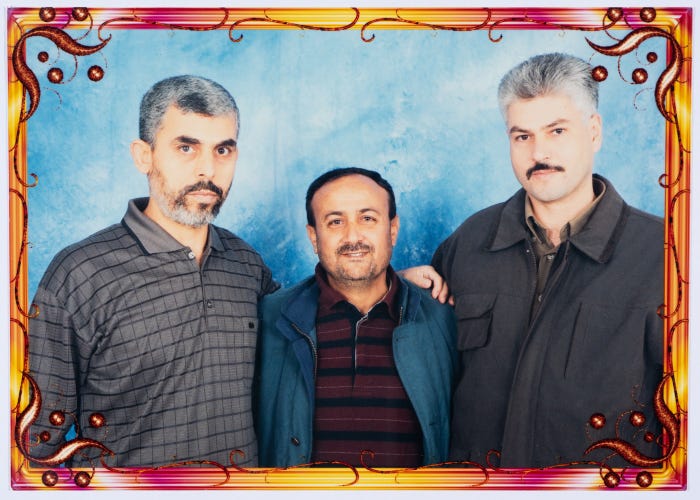
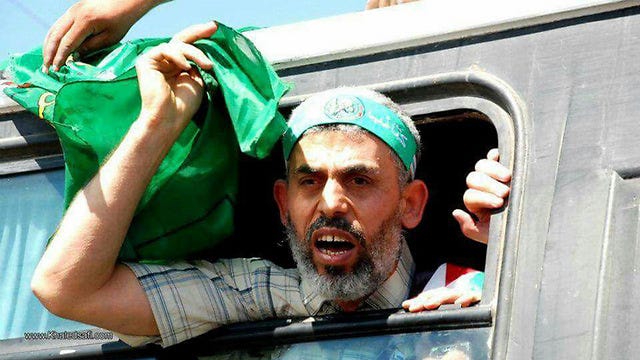
Soon, the most important and precedential exchange operation would transpire. On 25 June 2006, fighters from Qassam, the Nasser Salah al-Din Brigades (the military wing of the Popular Resistance Committees, or “PRC”) and Jaysh al-Islam (a PRC splinter group led by Mumtaz Dughmush) captured Gilad Shalit, an occupation tank crewman, during Operation “Dispelled Illusion” near Karam Abu Salem, east of Rafah.14 The fighters used a tunnel begun by Qassam members and Jamal Abu Samhadana, the PRC’s founder and the Hamas government’s head of the Executive Force, who was martyred in an occupation airstrike on 8 June 2006 before the raid took place.15 The raid began at 5:15 a.m. against a “military intelligence position” near the Sufa and Karam Abu Salem crossings, after “prolonged intelligence and security work.” The fighting involved an observation post and armored vehicles, and the fighters returned to Gaza with Shalit. Hamed al-Rantisi, from the Nasser Salah al-Din Brigades, and Muhammad Farwana, from Jaysh al-Islam, were martyred during the operation. The three groups’ joint communiqué dedicated the operation to Palestinian prisoners, specifically naming Ibrahim Hamed, Qassam’s imprisoned West Bank commander, and Palestinian women detainees.16 Al-Deif planned the operation with Raʾid al-ʿAttar, Qassam’s Rafah commander, and Muhammad Abu Shamala, a senior Qassam commander in southern Gaza, and ordered the establishment of the Shadow Unit in 2006 to conceal captives. Al-ʿAttar and Muhammad al-Sinwar, Qassam’s Khan Younis commander, supervised reconnaissance of the target and subsequently oversaw Shalit’s security. Ahmad al-Jaʿbari, al-Deif’s deputy and Qassam’s field commander, planned to “keep Shalit hidden for the duration of the Israeli reaction before beginning negotiations” and restricted access to his location even within Hamas’ leadership. Marwan Issa, a founding Qassam commander responsible for “special operations,” participated in Shalit’s capture and “played a part in negotiations, and then in attempts to have Palestinian prisoners released” in exchange for Shalit, before succeeding al-Jaʿbari in November 2012. In October 2009, Hamas provided a video showing Shalit alive in return for the release of twenty Palestinian women prisoners. The Wafa’ al-Ahrar agreement secured Shalit’s release on 18 October 2011 in exchange for 1,027 Palestinian prisoners, with 477 released that day and the remaining 550 on 18 December. Hamas’ negotiating team included al-Jaʿbari and Issa alongside Saleh al-Arouri, a founder of Qassam’s West Bank organization, and Nizar Awadallah, a senior Hamas leader in Gaza, while those released included Yahya al-Sinwar, a former head of Hamas’ Supreme Leadership Committee for Prisoners and the brother of the Khan Younis commander, alongside charismatic leaders with symbolic status, including Rawhi Mushtaha, Tawfiq Abu Naim, Husam Badran, Yaghmur, Ali al-Amudi, Musa Akari and Ziyad Awad.1718
During the 2014 war, Qassam obtained the remains of Oron Shaul, an occupation Golani Brigade soldier, in Shujaʿiyya on 20 July, and Hadar Goldin, an occupation Givati Brigade lieutenant, in Rafah on 1 August, and subsequently detained Avera Mengistu, an Ethiopian-born ‘Israeli’ civilian who entered Gaza in September 2014, and Hisham al-Sayed, a Bedouin ‘Israeli’ civilian who entered in 2015. By 2015, al-Sinwar held responsibility for negotiations over their exchange for Palestinian prisoners, and Hamas required the release of prisoners freed through Wafa’ al-Ahrar and subsequently rearrested by ‘Israel’ before proceeding with a new agreement. In April 2020, al-Sinwar proposed a partial concession concerning the captives in exchange for the release of elderly and sick Palestinian prisoners during the COVID-19 pandemic. In June 2021, Issa stated that the four captives could secure another prisoner exchange. In the months after the May 2021 Saif al-Quds confrontation, Egyptian mediators continued discussions with al-Sinwar, who had become Hamas’ leader in Gaza in 2017, and Issa led a Qassam delegation in indirect exchange negotiations in Cairo. These negotiations secured no exchange before 7 October 2023.19 Prime Minister Benjamin Netanyahu increasingly snubbed Hamas and disregarded its willingness, particularly under al-Sinwar’s pragmatic leadership, to engage in prisoner exchanges during peacetime; this intransigence hence paved the way for Tufan al-Aqsa.
The Flood and its Architects
As we have seen, the prisoner-exchange model was by no means a paroxystic or spasmodic tendency for the resistance but instead a thoroughgoing modus operandi interwoven into the plexus of its being. To understand just how poignantly the prisoners’ file impelled the resistance, it is important that we look at Tufan’s architects in view of their political history.20 So, who were the architects?
First and foremost, it is important to clarify who was not involved or aware of the operation’s planning. Mahmoud Mardawi, a Hamas political bureau official, recalls that on 7 October 2023 he awoke to unexpected news and immediately telephoned Saleh al-Arouri. Based on al-Arouri’s reaction during the call, Mardawi formed the impression that he had possessed no prior knowledge of the operation.21 A further account comes from Dr. Khaled Qaddoumi, Hamas’ representative in Iran, who discussed the decision-making behind Tufan al-Aqsa with Hamid Azimi and Mohammad Qatrani of the Iranian think tank Mersad on 19 August 2026.22 Qaddoumi stressed that the decision to launch the operation did not emerge from Hamas’ governmental institutions and had not been deliberated upon or adopted across the movement’s entire organizational structure. Indeed, he stated that “not even all of the political and military leaders inside Gaza were aware of this decision.”23 As he put it, “It was not the organs of a state that made the decision to launch the Flood. The decision itself was not made within the framework of state mechanisms.”24 Qaddoumi further emphasized the restricted circulation of advance knowledge within Hamas itself. He specifically named Ismail Haniyeh (“Abu al-Abd”), Khaled Mashal (“Abu al-Walid”), and Saleh al-Arouri, all of whom were “outside Palestine” when the operation began, stating that they learned of its commencement in essentially the same manner as the interviewers themselves.25
Sayyed Salem Abu Musameh, a founder-generation Hamas figure and former president of the movement’s General Shura Council, was interviewed by Palestinian journalist Samer Jaradat for Al Araby Tube’s ‘Lil-Hadith Sila’ podcast, with the episode published in February 2026.26 It offers the most comprehensive accounting of who within Hamas was aware of Tufan al-Aqsa prior to the operation’s execution. When asked who knew about Tufan al-Aqsa beforehand, Abu Musameh states that “only three” Hamas figures had advance knowledge of the operation’s detalings: “Marwan Issa, Yahya al-Sinwar, and Muhammad al-Deif.”27 According to Abu Musameh, neither Political Bureau members abroad nor the movement’s wider cadre had specific foreknowledge of the operation, though “everyone” within Hamas’ political ranks expected some resistance operation to eventually transpire giving the fomenting tensions.2829


A review of Issa’s, al-Sinwar’s, and al-Deif’s personal histories evinces that the prisoners’ file remained of the utmost importance. Marwan Issa was imprisoned by ‘Israel’ from 1987 until the early 1990s, for approximately five years, and subsequently held by the Palestinian Authority from 1997 until his release in 2000. Muhammad al-Deif’s first ‘Israeli’ imprisonment began in 1989; he was released two years later, though he was subsequently detained by the Palestinian Authority at a Preventive Security facility in Gaza City from May 2000 until his escape around 1 December 2000.30
Al-Sinwar’s detention is arguably the most significant of the three, as it became the site of his most ardent political activity prior to his 2011 release. After shorter ‘Israeli’ detentions in 1982 and an eight-month imprisonment beginning in 1985, he was imprisoned from 20 January 1988 until 18 October 2011, due to his leadership within ‘al-Majd’ and his efforts at squelching the occupation’s collaborator networks within Gaza.31 He spent time in Ashkelon, Ramla, Nafha, Hadarim, and Beersheba prisons, before his release through the Wafa’ al-Ahrar exchange. While in the occupation’s carceral system, al-Sinwar served as the chair of the Supreme Leadership Committee for Hamas Prisoners for two organizational terms, fraternizing with prisoners from not only Hamas but also myriad political factions. He worked with fellow prisoners to organize and lead mass hunger strikes and protests, most notably in 1992, 1996, 1999, 2000, and 2004. Their demands included “better detention conditions, an end to solitary confinement, family visits, and permission to receive newspapers and listen to the radio”; many of these bore fruit.32
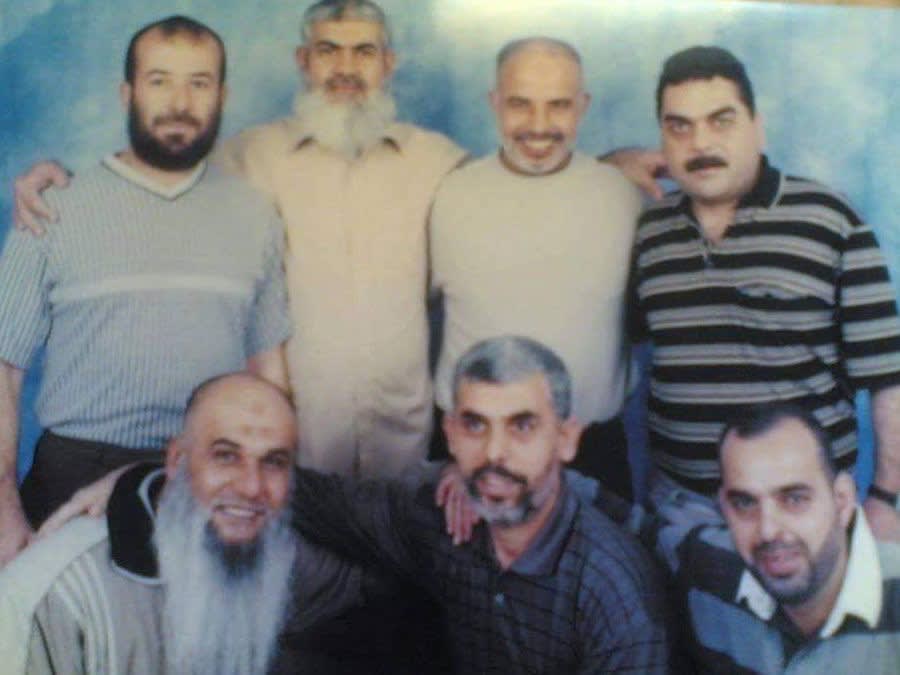
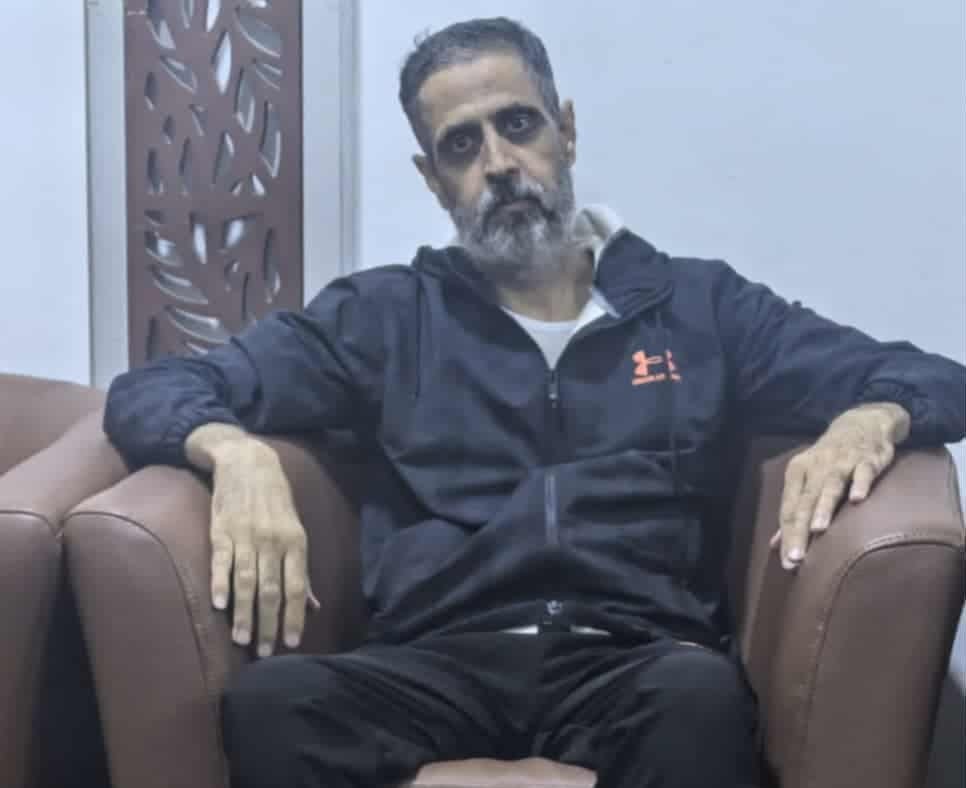
Al-Sinwar was equally determined that resistance to the prison authorities should continue, lest the ordinary relation between prisoner and jailer become one of passive submission. On one occasion, he and his comrade Rawhi Mushtaha retaliated against an official at Ramla prison for his ill-treatment of the Palestinian captives by pouring hot water over him. This was a minor but telling operation, as it involved the various prisoners working in unison, with a number having spread soap and oil across the floor such that, once further guards arrived, their attempted advance would be encumbered. On several occasions, al-Sinwar likewise directed prisoners to carry out knife attacks against jailers.33 Abdul Hakim Hanini, a Hamas leader and one of the founders of the Izz al-Din al-Qassam Brigades in the West Bank, described his former prison companion al-Sinwar as “[a] man of strategic thought, profound, widely cultivated in planning, security, military affairs, and literature, and passionately devoted to reading.”34 Bespeaking al-Sinwar’s genuine fondness for his fellow inmates and his humility, Hanini also recollected how:
We were in the solitary-confinement wing of Beersheba prison. Abu Ibrahim [al-Sinwar’s kunya], out of his great love for serving his brothers, would do anything to help them. He would make sweets for all the cells from whatever ingredients he could find. He would call out, ‘Bring me dishes,’ so that he could prepare something sweet. Thus, whenever he managed to save a few apples, or some bread and cheese, from his food rations, he would turn them into sweets for the other prisoners. [...] if he had three or four apples, he would cut them up, make syrup, and say, ‘This is apple kunefe.’ Another time, he would make something and say, ‘This is bread and cheese, yellow cheese.’ [...] Every time he had a chance to serve his brothers, he would serve them. [...] After his release and his election to the leadership in Gaza, he chose the most difficult file, the one with the most responsibility, the military. Yes, he took on a very difficult file, meaning he risked his life after 24 years in prison. If this indicates anything, it indicates the convictions he [...] held, that this is the path to the liberation of al-Quds [...] the path to liberating our Palestinian people, the path to restoring our rights.35
Ultra Palestine’s 2018 media critique of Zionist coverage of al-Sinwar’s famous interview with Yedioth Ahronoth recalls what several Hebrew commentators themselves highlighted as “the very first sentence” that al-Sinwar uttered upon his release in the 2011 Wafa’ al-Ahrar deal; citing the military analyst Alex Fishman, the piece highlights how:
Fishman reminded [readers] of the first sentence Sinwar spoke after his liberation from prison, where he said: ‘We have left brothers behind us, and we will not forget Ḥasan Salāmeh and Maḥmūd ʿĪsā.’ Fishman commented: ‘Sinwār sees Ḥasan Salāmeh’s mother every morning, for she lives opposite his house, and she makes sure he does not forget, even for a moment, her son whom he left behind.’36
None of this should suggest that it is a necessary condition for one to face imprisonment for the cause of liberating prisoners to serve as their impetus, but the intimacy of the operation’s three architects with the occupation’s carceral system further substantiates why it would have been of the utmost and lasting priority. Indeed, all three figures frequently returned to the prisoners’ file. In remarks broadcast by Al Jazeera’s What Is Hidden Is Greater in June 2021, Issa stressed the urgency of securing an exchange, remarking that “[w]e cannot waste more time while we are looking at the suffering and pain of the prisoners inside ‘Israeli’ jails and their families.”37 He underscored that the prisoners’ file is “the most important [file] now for al-Qassam,” before adding that the Qassam Brigades were working to free “all Palestinian and Arab prisoners,” and explained that during the preceding battle the resistance had sought to increase what it could obtain toward freeing prisoners from ‘Israeli’ prisons.38 He added that the prisoners’ file would be “the trigger and detonator of the coming surprises.”39
Al-Sinwar’s related remarks are well known and numerous, though reviewing some of the most important is instructive. In his interview with Francesca Borri, published on 5 October 2018, he called securing a prisoner exchange “a moral issue”40 and pledged: “I will try more than my best to free those who are still inside.” Hamas Political Bureau member Jasser al-Barghouti recalls that, during negotiations for Wafa’ al-Ahrar, the context of which is elaborated above, al-Sinwar rejected a proposed exchange that included his own release because it excluded prisoners from al-Quds.41 Indeed, before his 2011 release, al-Sinwar opposed an exchange excluding al-Quds’ prisoners, despite his own inclusion on the release list, and insisted that they be included.42 The proposed deal involved 1,170 prisoners but omitted thirty-five al-Quds prisoners serving life sentences; after his refusal, al-Sinwar was placed in isolation.43
For al-Sinwar, the prisoners’ file was deeply personal, and he pursued the freedom of his comrades on various fronts. When al-Sinwar briefly joined Mahmoud Sa’id Azzam in Shatta Prison in early 2007, al-Sinwar asked him, “Isn’t it time your case came to an end, Abu Adil?”44 He then wrote eleven letters in Hebrew to ‘Israeli’ officials and later asked attorney Sana Dweik to pursue Azzam’s case “whatever the cost”; Azzam credits some of these interventions with helping bring about the arrangement that ended his imprisonment in May 2009.45 After his own release, al-Sinwar continued to make the prisoners’ file a public priority. In April 2020, he offered a partial concession regarding the captives held in Gaza in return for elderly and sick Palestinian prisoners, while insisting that negotiations for a comprehensive exchange could not begin until those rearrested after Wafa’ al-Ahrar were freed. As for freeing the prisoners as a whole, he said, “the price is great, and the occupation must pay it.”46
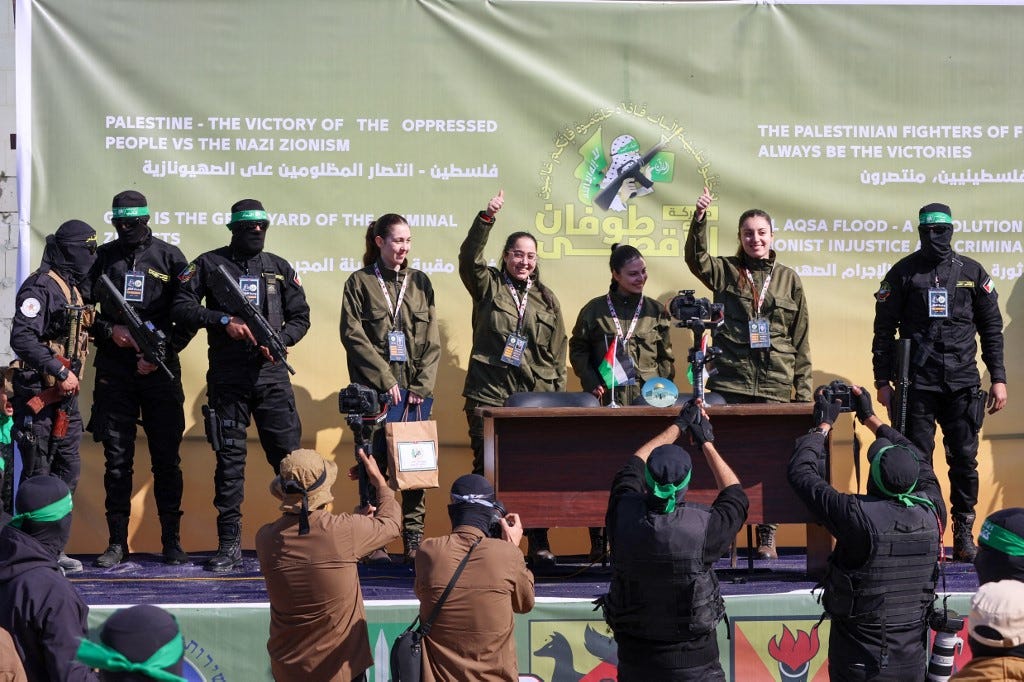
In al-Deif’s case, it is well known that his first publicly circulated statement, in October 1994, following the capture of Nachshon Wachsman, consisted in demanding the exchange of prisoners. During al-Deif’s 1989–1991 imprisonment, he and Salah Shehade, one of the inaugural figures who spearheaded the Qassam Brigades, agreed that, once released, al-Deif would establish a cell for capturing soldiers.47 Insofar as the Wachsman exchange was concerned, al-Deif’s proposed exchange famously extended well beyond Hamas, including fifty Hamas prisoners, twenty-five Palestinian Islamic Jihad prisoners, fifty Fatah prisoners serving long sentences, twenty PFLP prisoners, ten DFLP prisoners, twenty Hizbu’ llah prisoners, and all Palestinian women prisoners.48 This prefigured the cross-factional composition of the ‘Tufan al-Ahrar’ prisoner exchange that followed Tufan al-Aqsa, which, in its first phase, included among the prisoners slated for release 345 Hamas members, 229 Fatah members, 67 Palestinian Islamic Jihad members, 19 PFLP members, 6 DFLP members, 1 FIDA member, and 70 independents, in addition to 1,000 prisoners from Gaza detained during the war whose factional affiliations were not specified.49 In his recorded address on 7 October 2023, al-Deif again centered the release of Palestinian prisoners, echoing his remarks from three decades earlier.
Conclusion
The prisoners’ file by no means remained circumscribed to these three figures, who reflected the Izz al-Din al-Qassam Brigades’ rank-and-file members. On 25 June 2023, the al-Qassam Brigades published an article by Palestinian political commentator Izzat Jamal. Prefiguring the Flood, the text averred that “[a]fter 17 years since [Gilad] Shalit’s capture, capture remains a live option” before elaborating that “the liberation of Palestinian prisoners, especially those serving long sentences, the sick, and those serving life terms, can only be achieved through the capture of Israeli soldiers and officers.”50
I have in mind Khaled Hroub, Hamas: A Beginner’s Guide, 3rd ed. (London: Pluto Press, 2025), where he discusses Tufan al-Aqsa. For detailed scholarship on Hamas, see Ghassan Du’ar, Harb al-Ayyam al-Sab’ah: ‘Usud Hamas [The Seven Day War: The Lions of Hamas] (London: Filastin al-Muslimah, 1993); Ghassan Du’ar, Imad Aql: ‘Usturat al-Jihad wa-l-Muqawama [Imad Aql: Legend of Jihad and Resistance] (London: Filastin al-Muslimah, 1994); Ghassan Du’ar, al-Muhandis: Qissat al-Shahid al-Ramz Yahya Ayyash [The Engineer: The Story of the Shahīd Yahya Ayyash] (London: Filastin al-Muslimah, 1997); Jawad al-Hamad and Iyyad al-Barghouthi, eds., Dirasah fi al-Fikr al-Siyasi li-Harakat al-Muqawamah al-Islamiyyah: Hamas, 1987–1996 [A Study on the Political Thought of the Islamic Resistance Movement: Hamas, 1987–1996] (Amman: MESC, 1997); Khaled Hroub, Hamas: Political Thought and Practice (Beirut: Institute for Palestine Studies, 2000); Jeroen Gunning, “Re-thinking Western Constructs of Islamism: Pluralism, Democracy and the Theory and Praxis of the Islamic Movement in the Gaza Strip” (PhD diss., Durham University, 2000); Azzam Tamimi, Hamas: Unwritten Chapters (London: Hurst, 2009); Jeroen Gunning, Hamas in Politics: Democracy, Religion, Violence (London: Hurst, 2009); Basim al-Zubaidi, Hamas wa-l-Hukm: Dukhul al-Nizam am al-Tamarrud ‘Alayh [Hamas and Power: Entering the System or Rebelling Against It] (Ramallah: Palestinian Center for Policy and Survey Research, 2010); Sara Roy, Hamas and Civil Society in Gaza: Engaging the Islamist Social Sector (Princeton, NJ: Princeton University Press, 2011); Yezid Sayigh, We Serve the People: Hamas Policing in Gaza (Waltham, MA: Crown Center for Middle East Studies, Brandeis University, 2011); Nihad al-Shaykh Khalil, Harakat al-Ikhwan al-Muslimin fi Qitaʿ Ghazza (1967–1987) [The Muslim Brotherhood Movement in the Gaza Strip, 1967–1987] (Gaza: Markaz al-Taʾrikh wa-l-Tawthiq al-Filastini, 2011); International Crisis Group, Radical Islam in Gaza, Middle East Report no. 104 (29 March 2011); Hosni Mohamad Borini, Marj al-Zuhur: Mahattat fi Tarikh al-Harakah al-Islamiyyah fi Filastin [Marj al-Zuhur: A Key Event in the History of the Islamic Movement in Palestine] (Beirut: Al-Zaytouna Centre, 2012); Emanuel Schaeublin, “Role and Governance of Islamic Charitable Institutions: Gaza Zakat Organizations (1973–2011) in the Local Context” (Geneva: Graduate Institute Centre on Conflict, Development and Peacebuilding, 2012); International Crisis Group, Light at the End of Their Tunnels? Hamas and the Arab Uprisings, Middle East Report no. 129 (14 August 2012); Mohsen Mohammad Saleh, ed., Islamic Resistance Movement-Hamas: Studies of Thought and Experience (Beirut: Institute for Palestine Studies, 2017); Björn Brenner, Gaza Under Hamas: From Islamic Democracy to Islamist Governance (London: I.B. Tauris, 2017); Ghassan Du’ar, Qawaʿid al-Shuyukh: Muqawamat al-Ikhwan al-Muslimin Didd al-Mashruʿ al-Suhyuni, 1968–1970 [The Shuyukh Camps: The Resistance of the Muslim Brothers Against the Zionist Project, 1968–1970] (Beirut: Al-Zaytouna Centre, 2018); Abdalhakim Aziz Hanaini, Manhajiyyat Harakat Hamas fi al-‘Alaqat al-Kharijiyyah: Suria Namudhajan, 2000–2015 [Hamas’ Foreign Policy: Syria as a Case Study, 2000–2015] (Beirut: Al-Zaytouna Centre, 2018); Tareq Baconi, Hamas Contained: The Rise and Pacification of Palestinian Resistance (Stanford, CA: Stanford University Press, 2018), whose titular thesis of “containment” was belied by Tufan al-Aqsa but plays a limited role in the book itself; Baconi’s use of Palestinian archival materials remains one of the work’s principal strengths, including the Gaza City archives, the Institute for Palestine Studies’ Al-Watha’iq al-‘Arabiyyah, Al-Zaytouna Centre’s Al-Watha’iq al-Filastiniyyah, and the Al-Resalah archive; Daud Abdullah, Engaging the World: The Making of Hamas’ Foreign Policy (Johannesburg: Afro-Middle East Centre, 2020); Ahmed Qasem Hussein, “The Evolution of the Military Action of the Izz al-Din al-Qassam Brigades: How Hamas Established Its Army in Gaza,” Al-Muntaqa 1, no. 2 (September–October 2021): 78–97; Qossay Hamed, “The Constant and the Variable in the Ideology of Hamas (2006–2018)” (PhD diss., Université de Bordeaux, 2021); Dag Tuastad, “Hamas and the Clans: From Islamisation of Tribalism to Tribalization of Islamism?,” Third World Thematics 6, nos. 1–3 (2021): 88–104; Abdalhadi Alijla, “The (Semi) State’s Fragility: Hamas, Clannism, and Legitimacy,” Social Sciences 10, no. 437 (2021): 1–18; Abdalhadi Alijla, “Thorny Identity? Non-state Actors, Service Provision, Identities, and Hamas in Gaza,” Small Wars & Insurgencies 34, no. 1 (2022): 195–220; Leila Seurat, The Foreign Policy of Hamas: Ideology, Decision Making and Political Supremacy, trans. Martin Makinson (London: I.B. Tauris, 2022); Jean-François Legrain, “Hamas According to Hamas: A Reading of Its Document of General Principles,” in Routledge Handbook of Political Islam, 2nd ed., ed. Shahram Akbarzadeh (Abingdon: Routledge, 2022), 79–90; Yahya al-Sanea, Tarikh Harakat Hamas: al-Nash’a wa-l-Tatawwur [The History of the Hamas Movement: Emergence and Development] (Al-Raya for Research and Studies, 2022); Paola Caridi, Hamas: From Resistance to Regime, updated ed. (New York: Seven Stories Press, 2023); Tarek Hamoud, “Socializing Hamas: Evaluating the Structural Political Developments in the Islamic Palestinian Resistance Movement as a Ruling Authority Between 2006–2017” (PhD diss., University of Exeter, 2023); Basem Ezbidi, “Not Rebel Governance? Hamas’s Rule,” in Rebel Governance in the Middle East, ed. Ibrahim Fraihat and Abdalhadi Alijla (Singapore: Springer Nature, 2023), 281–318; Majd Abuamer, “Gaza’s Subterranean Warfare: Palestinian Resistance Tunnels vs. Israel’s Military Strategy,” Studies in Conflict & Terrorism, published online 5 May 2024; Fatima al-Samadi, Iran wa-Hamas: min Marj al-Zuhur ila Tufan al-Aqsa (Doha: Al Jazeera Centre for Studies, 2024); Talha Ismail Duman, “Beyond Sectarianism: Hezbollah and the Lebanese Muslim Brotherhood’s Evolving Alliance in the Context of the Al-Aqsa Flood,” Sakarya Üniversitesi İlahiyat Fakültesi Dergisi 51, no. 1 (2025): 36–53; Netanel Flamer, The Hamas Intelligence War against Israel (Cambridge: Cambridge University Press, 2025); Hroub, Hamas: A Beginner’s Guide; Ibrahim ‘Abdul Karim, Collaborator Militias in Gaza Strip and Their Role in Israel’s Use of Rogue Actors (Beirut: Al-Zaytouna Centre for Studies & Consultations, 2026); Diya’ Na’im al-Safadi, The Legal Framework of the Crime of Espionage with the Israeli Occupation: A Descriptive-Analytical Study of the Israeli War on Gaza 2023–2025 (Beirut: Al-Zaytouna Centre for Studies & Consultations, 2026); Jose Vericat, “The Internal Conversation of Hamas: Salafism and the Rise of the ‘Ulama’” (DPhil diss., University of Oxford, 2016); and Leila Seurat, “From Government to Armed Struggle: Hamas’s Legitimation Politics,” in Armed Groups and the Politics of International Legitimation, ed. Stephan Hensell and Klaus Schlichte (Oxford: Oxford University Press, 2026), 193–210.
For mediocre scholarship, see Avraham Sela and Shaul Mishal, The Palestinian Hamas: Vision, Violence, and Coexistence (New York: Columbia University Press, 2000), which contains a number of historical errors identified by Khaled Hroub; Zaki Chehab, Inside Hamas: The Untold Story of the Militant Islamic Movement (London: I.B. Tauris, 2007), which draws on important first-hand interviews but also relies heavily on ‘Israeli’ intelligence reporting; Paul McGeough, Kill Khalid: The Failed Mossad Assassination of Khalid Mishal and the Rise of Hamas (New York: New Press, 2010), which draws on interviews with Khaled Meshal but repeats significant historical errors, including the characterization of the Palestinian Village Leagues as a Gazan phenomenon, following Ray Hanania’s mistaken account in “Sharon’s Terror Child,” CounterPunch, 18–19 January 2003, although the Village Leagues were a West Bank institution; Beverley Milton-Edwards and Stephen Farrell, Hamas: The Islamic Resistance Movement (Cambridge: Polity, 2010), which relies heavily on partisan ‘Israeli’ journalism; Tariq Mukhimer, Hamas Rule in Gaza: Human Rights under Constraint (London: Palgrave Macmillan, 2013), which elides the political backing for the PA/Fatah attempt to overthrow Hamas in 2006–7, although its interviews remain useful; Tristan Dunning, Hamas, Jihad and Popular Legitimacy: Reinterpreting Resistance in Palestine (New York: Routledge, 2016), whose principal contribution lies in its analytic framework; Hsiu-Ping Bao, “Hamas’ Political Transformation and Engagement, 2003–2013” (PhD diss., University of Exeter, 2016), which relies heavily on the Palestine Information Center; Nicole J. Watkins and Alena M. James, “Digging into Israel: The Sophisticated Tunneling Network of Hamas,” Journal of Strategic Security 9, no. 1 (2016): 84–103, which relies exclusively on ‘Israeli’ sources and is less comprehensive historically than Abuamer’s later study; Martin Kear, Hamas and Palestine: The Contested Road to Statehood (New York: Routledge, 2018), which is chiefly useful for its international-relations framework but contains little first-hand evidence; Beverley Milton-Edwards and Stephen Farrell, Hamas: The Quest for Power (Cambridge: Polity, 2024), which continues the earlier volume’s reliance on partisan ‘Israeli’ journalism; Flamer, Hamas Intelligence War; and Daniel Sobelman, Axis of Resistance: Asymmetric Deterrence and Rules of the Game in Contemporary Middle East Conflicts (Albany: SUNY Press, 2025), which approaches the subject from a Zionist analytical framework but contains useful material on Operation Guardian of the Walls/Sword of Jerusalem.
For work characterized by poor scholarship and hewing closer to propaganda, see Matthew Levitt, Hamas: Politics, Charity, and Terrorism in the Service of Jihad, with an introduction by Dennis Ross (New Haven, CT: Yale University Press, 2006), whose evidentiary base relies overwhelmingly on neoconservative think-tank reports, CIA and other U.S. government reports, regime-change policy papers, and Zionist think tanks, political figures, and advocacy organizations.
For a sampling of Hamas witness accounts, memoirs, and studies whose value lies in direct experience or proximity to political decision-making or armed resistance activity, see Ibrahim Ghosheh, The Red Minaret: Memoirs of Ibrahim Ghosheh (Beirut: Al-Zaytouna Centre, 2013); Ibrahim Natil, Hamas Transformation: Opportunities and Challenges (Newcastle upon Tyne: Cambridge Scholars Publishing, 2015), a first-hand account of Hamas governance that lacks the scholarly oversight of the stronger academic literature; Mohammad Naji Sabha, The Cultural Experience of Hamas Movement in the Israeli Prisons (Beirut: Al-Zaytouna Centre for Studies and Consultations, 2024); ʿAbd Allāh Yūsuf al-Laddāwī, “The Seeds of Hamas: A Report on Promoting the Values and Morals of Islam in Palestinian Society” (2025); ʿAbd Allāh Yūsuf al-Laddāwī, “Instinctive Archery” (2025); and Muhammad Zaki Hamad, “Under the Banner of the Flood” (2025).
Hamas Media Office, Our Narrative: Operation Al-Aqsa Flood (2023), 1–16.
Ibid., 5–6.
Ibid., 7.
Ibid., 12.
Tamer al-Mishal, “Ma Khafiya Aʿẓam: al-Ṭūfān” [“What Is Hidden Is Greater: The Flood”], Al Jazeera Arabic, 24 January 2025, interview with Izz al-Din al-Haddad, esp. 22:03–27:29, YouTube video, accessed 3 October 2026, https://www.youtube.com/watch?v=GTvsWLVC9QU; Ibrahim Huthayfa al-Kahlout, Telegram channel (@ebrahimhodifa), 2026, accessed 3 October 2026, https://t.me/ebrahimhodifa.
Seurat, Foreign Policy of Hamas, 247–48; Sujud ʿAwayis, “Min ‘al-Subaru’ ila al-Dafʿ al-Rubaʿi: Mujaz Tarikh al-Khatf,” Metras, 9 March 2024, accessed 3 October 2026, https://metras.co/%D9%85%D9%86-%D8%A7%D9%84%D8%B3%D9%88%D8%A8%D8%A7%D8%B1%D9%88-%D8%A5%D9%84%D9%89-%D8%A7%D9%84%D8%AF%D9%81%D8%B9-%D8%A7%D9%84%D8%B1%D8%A8%D8%A7%D8%B9%D9%8A-%D9%85%D9%88%D8%AC%D8%B2-%D8%AA%D8%A7/.
Hasan Kamal, “Sirat Sahib al-Zill al-Jalil: Muhammad al-Dayf,” Metras, 13 February 2025, accessed 3 October 2026, https://metras.co/%D8%B3%D9%8A%D8%B1%D8%A9-%D8%B5%D8%A7%D8%AD%D8%A8-%D8%A7%D9%84%D8%B8%D9%84-%D8%A7%D9%84%D8%AC%D9%84%D9%8A%D9%84-%D9%85%D8%AD%D9%85%D8%AF-%D8%A7%D9%84%D8%B6%D9%8A%D9%81/; see also Rajab Hasan al-ʿAwadi al-Baba, “Juhud Harakat al-Muqawama al-Islamiyya Hamas fi al-Intifada al-Filastiniyya, 1987–1994” (master’s thesis, Islamic University of Gaza, 2010).
Du’ar, Harb al-Ayyam al-Sab’ah, part 1, 13–14, especially 13. Translation from the supplied Arabic edition. Its account identifies the captors as Group 53 of the special “Musʿab” unit and dates the capture to 6:30 a.m. on 13 December 1992.
Du’ar, Imad Aql, 4. Translation from the supplied Arabic edition.
Du’ar, al-Muhandis, 52–53, especially 53.
McGeough, Kill Khalid, 2–3, 182–85, 204–8. McGeough identifies the poison as levofentanyl and the antidote as Narcan. The latter was already part of the treatment provided by Meshal’s Jordanian doctors.
Kamal, “Sirat Sahib al-Zill al-Jalil”; ʿAwayis, “Min ‘al-Subaru’”; Mujamma Haraket, “On ‘The Guest,’ Mohammed al-Deif: Abu Khaled’s Decades-Long Resistance Work (Part One),” Mujamma Haraket (Substack), 8 February 2026, https://mujammaharaket.substack.com/p/mohammed-al-deif-abu-khaleds-role; Flamer, Hamas Intelligence War, 139, 142–45; Seurat, Foreign Policy of Hamas, 248; “Awwal al-Ghayth: 18 ʿAman ʿala Asr al-Qassam li-Dabit al-Shabak (Nurail) fi al-Quds,” Al-Resalah, 21 September 2023, https://alresalah.news/p/290902.
Jaysh al-Islam announced its existence the following day and had not yet shown “any signs that it intended to conduct the sort of attacks against Westerners” associated with its subsequent Salafi-Jihadi activity. See International Crisis Group, Radical Islam in Gaza, 8–9. The report establishes that Jaysh al-Islam had not yet displayed its later pattern of attacks against Westerners at the time of Shalit’s capture, rather than establishing a precise date when its members adopted Salafi-Jihadi beliefs.
Ibid.; Mujamma Haraket, “‘Operation Vanishing Illusion’ (ʿAmaliyyat al-Wahm al-Mutabaddid) as a Prefiguration of ‘Tufan al-Aqsa,’” Mujamma Haraket (Substack), 29 June 2026, sec. I, accessed 4 October 2026, https://mujammaharaket.substack.com/p/operation-vanishing-illusion-amaliyyat.
Izz al-Din al-Qassam Brigades, Information Office, al-Wahm al-Mutabaddid [Dispelled Illusion], no. 1, special bulletin, 26 June 2006, joint military communiqué dated 25 June 2006 and the report beginning “Khass” [Special]. The communiqué gives the start time and describes the target and prior intelligence work. The accompanying report names Hamed al-Rantisi and Muhammad Farwana and identifies their respective organizations.
Seurat, Foreign Policy of Hamas, 213–14; Mujamma Haraket, “Operation Vanishing Illusion,” introduction.
ʿAbd al-Quddus al-Hashimi, “Hikayat al-Rajul al-Makith: Muhammad al-Dayf,” Metras, 1 December 2025, https://metras.co/%D8%AD%D9%83%D8%A7%D9%8A%D8%A9-%D8%A7%D9%84%D8%B1%D8%AC%D9%84-%D8%A7%D9%84%D9%85%D9%83%D9%8A%D8%AB-%D9%85%D8%AD%D9%85%D8%AF-%D8%A7%D9%84%D8%B6%D9%8A%D9%81/; Flamer, Hamas Intelligence War, 146–49; Seurat, Foreign Policy of Hamas, 246; Tamer Almisshal, “Israel and Hamas: Anatomy of a Prisoner Exchange,” Al Jazeera World, 14 July 2021, https://www.aljazeera.com/video/al-jazeera-world/2021/7/14/israel-and-hamas-anatomy-of-a-prisoner-exchange; Larbi Sadiki, “Hamas and Israel: Captives of War and Peace,” Al Jazeera, 19 October 2011, https://www.aljazeera.com/opinions/2011/10/19/hamas-and-israel-captives-of-war-and-peace.
Erik Skare, The Road to October 7: A Brief History of Palestinian Islamism (London: Verso, 2025); Seurat, Foreign Policy of Hamas, 246; “Hamas Releases Audio Allegedly of Israeli Soldier It Holds,” Al Jazeera, 7 June 2021, https://www.aljazeera.com/news/2021/6/7/exclusive-audio-recording-of-israeli-soldier-held-by-hamas; “Wasaʾil Iʿlam Israʾiliyya Tatahaddath ʿan Taqaddum bi-Safqat Tabadul al-Asra maʿ Hamas,” Al Jazeera, 3 May 2020, https://www.aljazeera.net/politics/2020/5/3/%D9%88%D8%B3%D8%A7%D8%A6%D9%84-%D8%A5%D8%B9%D9%84%D8%A7%D9%85-%D8%A5%D8%B3%D8%B1%D8%A7%D8%A6%D9%8A%D9%84%D9%8A%D8%A9-%D8%AD%D9%85%D8%A7%D8%B3-%D8%B5%D9%81%D9%82%D8%A9-%D8%AA%D8%A8%D8%A7%D8%AF%D9%84; “Wafd Amni Misri Yahmil Rasaʾil Israʾiliyya li-l-Sinwar,” Al-Araby al-Jadeed, 29 May 2021, https://www.alaraby.co.uk/politics/%D9%88%D9%81%D8%AF-%D8%A3%D9%85%D9%86%D9%8A-%D9%85%D8%B5%D8%B1%D9%8A-%D9%8A%D8%AD%D9%85%D9%84-%D8%B1%D8%B3%D8%A7%D8%A6%D9%84-%D8%A5%D8%B3%D8%B1%D8%A7%D8%A6%D9%8A%D9%84%D9%8A%D8%A9-%D9%84%D9%84%D8%B3%D9%86%D9%88%D8%A7%D8%B1; “Dughut Israʾiliyya ʿala Misr li-Tahsil Tanazulat min Hamas bi-Safqat al-Asra,” Al-Araby al-Jadeed, 17 July 2021, https://www.alaraby.co.uk/politics/%D8%B6%D8%BA%D9%88%D8%B7-%D8%A5%D8%B3%D8%B1%D8%A7%D8%A6%D9%8A%D9%84%D9%8A%D8%A9-%D8%B9%D9%84%D9%89-%D9%85%D8%B5%D8%B1-%D9%84%D8%AA%D8%AD%D8%B5%D9%8A%D9%84-%D8%AA%D9%86%D8%A7%D8%B2%D9%84%D8%A7%D8%AA-%D9%85%D9%86-%22%D8%AD%D9%85%D8%A7%D8%B3%22-%D8%A8%D8%B5%D9%81%D9%82%D8%A9-%D8%A7%D9%84%D8%A3%D8%B3%D8%B1%D9%89.
For more detailed discussion of the prisoners faction within Hamas, see Mujamma Haraket, “The Prisoners Faction of the Islamic Resistance Movement (Hamas): A Case Study on Awad Sulami, Zaher Jabarin, and Hassan Salameh,” Mujamma Haraket (Substack), 25 November 2025, accessed 4 October 2026, https://mujammaharaket.substack.com/p/understanding-social-reproduction; Mujamma Haraket, “Pulse of the Prison Translated: New Short Essays from the Palestinian Resistance,” Mujamma Haraket (Substack), 6 January 2026, accessed 4 October 2026, https://mujammaharaket.substack.com/p/pulse-of-the-prison-translated; Mujamma Haraket, “Excerpts from ‘Al-Majd’ (Glory) by Yahya al-Sinwar (2010),” Mujamma Haraket (Substack), 17 January 2026, accessed 4 October 2026, https://mujammaharaket.substack.com/p/excerpts-from-al-majd-glory-by-yahya; Mujamma Haraket, “Yusuf University: The Islamic Resistance Movement’s University System Built Within the Occupation’s Prison Walls,” Mujamma Haraket (Substack), 16 April 2026, accessed 4 October 2026, https://mujammaharaket.substack.com/p/yusuf-university.
Mardawi nevertheless qualifies this inference by describing al-Arouri as “a well,” by which he means that al-Arouri was an exceptionally reserved figure who rarely betrayed what he knew. Mahmoud Mardawi, discussion with Ahmad Biqawi, YouTube video, accessed 4 October 2026, https://www.youtube.com/watch?v=UHKT2K2oxt8.
Khaled Qaddoumi, interview by Hamid Azimi and Mohammad Qatrani, “Khaled Qaddoumi: Hamas Did Not Form a Government in Gaza; al-Aqsa Flood Was a Political-Field Decision,” Mersad, interview conducted 19 August 2026, published 15 September 2026, accessed 4 October 2026, https://mersadcss.com/activities/interviews/%D8%AE%D8%A7%D9%84%D8%AF-%D9%82%D8%AF%D9%88%D9%85%DB%8C-%D8%AD%D9%85%D8%A7%D8%B3-%D8%AF%D8%B1-%D8%BA%D8%B2%D9%87-%D8%AD%DA%A9%D9%88%D9%85%D8%AA-%D8%AA%D8%B4%DA%A9%DB%8C%D9%84-%D9%86%D8%AF%D8%A7%D8%AF/
Ibid.
Ibid.
Ibid.
Sayyed Abu Musameh, “Hamas: A Memory of Blood and Struggle”, AlArabyTube (Li-l-Hadith Sila Podcast), February 2026; retrieved online (29 September 2026): https://www.youtube.com/watch?v=VmCJoAjnOLc.
Ibid.
Ibid.
“The Meir Amit Intelligence and Terrorism Information Center at the Israeli Intelligence Heritage and Commemoration Center,” which is close to the occupation’s military and intelligence services, published what it presented as still more specific correspondence concerning these deliberations (The Meir Amit Intelligence and Terrorism Information Center at the Israeli Intelligence Heritage and Commemoration Center, “Activities of Saeed Izadi, Head of the Qods Forces’ ‘Palestine Branch,’ Reflected in Captured Documents,” January 30, 2025, pp. 6–8, https://www.terrorism-info.org.il/app/uploads/2025/02/E_012_25-1.pdf). In a purported letter dated June 19, 2022, Sinwar informed Haniyeh that preparations for a “great strategic battle” were nearing completion and asked him to present Hizbu’ llah and Iran with three possible scenarios for the coming confrontation. These ranged from a broad “great strategic campaign” involving all components of the Axis of Resistance except Iran as a direct belligerent, through more limited Hizbu’ llah participation, to an offensive led principally by Hamas while Hizbu’ llah initially remained outside the fighting (Meir Amit Center, “Activities of Saeed Izadi,” op. cit., pp. 6–7). Sinwar sought, at minimum, Nasru’ llah’s assent to one of the proposed courses of action and also proposed creating a 250-man Hamas force in Lebanon in preparation for the confrontation (Meir Amit Center, “Activities of Saeed Izadi,” op. cit., pp. 6–7). These letters have not been independently corroborated and should therefore be treated with dubiety, although the resistance platform “Stay Aware” did not, as it generally does when purportedly forged documents circulate, challenge their authenticity.
In a purported July 1, 2022 reply, Haniyeh reported that he had presented the two more expansive scenarios to Hizbu’ llah Secretary-General Hassan Nasru’ llah during consultations arranged by Muhammad Saeed Izadi (“Hajj Ramadan”), then head of the IRGC Quds Force’s Palestine Branch (Rabiʿ al-Saʿdani, “Muhammad Saeed Izadi ‘Hajj Ramadan’: The Shadow Man in the Axis of Resistance against Israel,” Zaad Iran, June 2025, https://zaadiran.com/%D9%85%D8%AD%D9%85%D8%AF-%D8%B3%D8%B9%D9%8A%D8%AF-%D8%A5%D9%8A%D8%B2%D8%AF%D9%8A-%D8%A7%D9%84%D8%AD%D8%A7%D8%AC-%D8%B1%D9%85%D8%B6%D8%A7%D9%86-%D8%B1%D8%AC%D9%84-%D8%A7%D9%84%D8%B8%D9%84-%D9%81/; Meir Amit Center, “Activities of Saeed Izadi,” op. cit., pp. 7–8). According to the purported correspondence, Nasru’ llah regarded the broadest option as “realistic”: a surprise, multi-front campaign involving Hamas, Hizbu’ llah, and other components of the Axis of Resistance, while Iran remained outside the war as a direct belligerent (Meir Amit Center, “Activities of Saeed Izadi,” op. cit., pp. 7–8). Izadi reportedly endorsed the proposal in principle but maintained that its available means, obstacles, and operational requirements first required further study (Meir Amit Center, “Activities of Saeed Izadi,” op. cit., pp. 7–8). According to the documents, the participants then agreed that the relevant parties should prepare a comprehensive plan identifying the proposal’s strengths and weaknesses, necessary means, respective roles, participating organizations, and operational arenas. They further agreed that the proposal would be submitted to Iran’s Supreme Leader, the late Ayatollah Ali Khamenei (Meir Amit Center, “Activities of Saeed Izadi,” op. cit., p. 8).
The Center’s later reconstruction, published on June 18, 2026, nevertheless distinguishes these broader strategic consultations from foreknowledge of the operation’s final timing. It maintains that Haniyeh knew an operation was being prepared and participated in coordination discussions but “apparently was not aware of its exact date” (The Meir Amit Intelligence and Terrorism Information Center at the Israeli Intelligence Heritage and Commemoration Center, “The Deception Plan Practiced by Hamas before the October 7, 2023 Attack (Including Documents from the Gaza Strip),” June 18, 2026, pp. 15–16, https://www.terrorism-info.org.il/en/the-deception-plan-practiced-by-hamas-before-the-october-7-2023-attack-including-documents-from-the-gaza-strip/), a finding consistent with Musameh’s remarks. The Center also cites Izz al-Din al-Haddad, who had commanded the Qassam Brigades’ Gaza Brigade since succeeding Bassem Issa following the latter’s shahāda in May 2021 and was reportedly among the small circle of military leaders overseeing Tufan al-Aqsa (“After the Shahāda of Deif and His Comrades: Who Are the Most Prominent Remaining Figures in al-Qassam?,” Al Jazeera, January 31, 2025, https://www.aljazeera.net/news/2025/1/31/%D8%A8%D8%B9%D8%AF-%D8%A7%D8%B3%D8%AA%D8%B4%D9%87%D8%A7%D8%AF-%D8%A7%D9%84%D8%B6%D9%8A%D9%81-%D9%88%D8%B1%D9%81%D8%A7%D9%82%D9%87-%D9%85%D8%A7-%D8%A3%D8%A8%D8%B1%D8%B2). According to the Center, al-Haddad stated that Hamas had informed its partners in the Axis of Resistance of its general intention to carry out the operation while withholding the zero hour entirely, which remained known only to a very small number of people (Meir Amit Center, “The Deception Plan,” op. cit., p. 16).
The Center additionally recounts a purported letter that Muhammad Deif, Yahya Sinwar, and Marwan Issa reportedly sent to Nasru’ llah immediately after the operation began on the morning of October 7, 2023. According to the Center’s account, the three explained that they had intentionally concealed the operation’s timing from Nasru’ llah in order to minimize the possibility that ‘Israeli’ intelligence would detect the plan beforehand (Meir Amit Center, “The Deception Plan,” op. cit., p. 16). The Center further maintains that this compartmentalization encompassed Hamas’ leadership abroad as well as most of its leadership inside Gaza. According to its reconstruction, even the operational order itself was withheld until the final minutes in order to prevent ‘Israel’ from discovering the plan and launching a preemptive attack (Meir Amit Center, “The Deception Plan,” op. cit., p. 16).
Kamal, “Sirat Sahib al-Zill al-Jalil.”
“Yahya al-Sinwar: Asir Muharrar Qada Harakat Hamas wa-Istushhida fi Muwajaha ma’a al-Ihtilal,” Al Jazeera Encyclopedia, 13 February 2017, updated 18 October 2024, https://www.aljazeera.net/encyclopedia/2017/2/13/%D8%AA%D8%B9%D8%B1%D9%81-%D8%B9%D9%84%D9%89-%D9%8A%D8%AD%D9%8A%D9%89-%D8%A7%D9%84%D8%B3%D9%86%D9%88%D8%A7%D8%B1-%D9%82%D8%A7%D8%A6%D8%AF-%D8%AD%D9%85%D8%A7%D8%B3-%D8%A7%D9%84%D8%AC%D8%AF%D9%8A%D8%AF; Shatha Hammad, “Yahya al-Sinwar: ‘an Wuquf al-Alif fi Wajh al-Mawt” [“Long Live al-Sinwar: On the Alif Standing Up to Death”], Metras, 20 October 2024, accessed 27 September 2026, https://metras.co/%D9%8A%D8%AD%D9%8A%D8%A7-%D8%A7%D9%84%D8%B3%D9%86%D9%88%D8%A7%D8%B1-%D8%B9%D9%86-%D9%88%D9%82%D9%88%D9%81-%D8%A7%D9%84%D8%A3%D9%84%D9%81-%D9%81%D9%8A-%D9%88%D8%AC%D9%87-%D8%A7%D9%84%D9%85%D9%88%D8%AA/.
Hammad, “Yahya al-Sinwar.”
According to Hammad, “Yahya al-Sinwar,” “[e]ven from behind the high walls of Hadarim prison, al-Sinwar planned the abduction of ‘Israeli’ soldiers for exchange with Palestinian prisoners.” Former Shin Bet official Yossi Amrosi later stated that al-Sinwar had directed a cell that sought to abduct a soldier and spirit him through a tunnel from Rafah into Egypt.
Abdul Hakim Hanini, “Al-ʿAruri and al-Sinwar Up Close, with the Companion of the Two Leaders,” interview by Khair al-Din al-Jabri, Jisr Podcast, SamaQuds, 30 January 2024, YouTube video, accessed 4 October 2026, https://www.youtube.com/watch?v=a9C1EJME8gU.
Ibid.
“Kayfa Taʿāmalat ‘Isrāʾīl’ maʿ Muqābalat al-Sinwār?,” Ultra Palestine, 2018.
“Hamas Military Wing Says Prisoner File Will ‘Shock’ Occupation Authorities,” Middle East Monitor, 15 June 2021, https://www.middleeastmonitor.com/20210615-hamas-military-wing-says-prisoner-file-will-shock-occupation-authorities/.
Akram al-Shafi’i, “Two Analysts Explain to ‘Safa’ the Resistance’s Messages in ‘Ma Khafiya A’zam,’” Safa, 7 June 2021, accessed 29 September 2026, https://safa.ps/post/307100/محللان-يكشفان-لـ-صفا-عن-رسائل-المقاومة-ببرنامج-ما-خفي-أعظم; “Al-Qassam Plays Recording of an ‘Israeli’ Soldier: The Prisoners’ File Will Be the Trigger and Detonator,” Ultra Palestine, 7 June 2021.
“Al-Qassam Plays Recording of an ‘Israeli’ Soldier.”
Yahya al-Sinwar, “Sinwar: ‘It’s Time for a Change, End the Siege,’” interview by Francesca Borri, Ynet, 5 October 2018, https://www.ynetnews.com/articles/0,7340,L-5364286,00.html.
Hammad, “Yahya al-Sinwar”; Jasser al-Barghouti, “Al-Quds fi Qalb al-Sinwar,” excerpt from Jisr Podcast, SamaQuds, 22 October 2024; Mahmoud Mardawi and Jasser al-Barghouti, “Fi Ghiyab al-Shahid: Asrar wa-Tafasil ‘an al-Sinwar Yakshifuha Qiyadiyyan min Hamas,” interview by Ahmad Mansour, Shahid ‘ala al-‘Asr, Al Jazeera, 25 January 2025, accessed 29 September 2026, https://www.aljazeera.net/amp/video/centurywitness/2025/1/25/في-غياب-الشاهد-أسرار-وتفاصيل-عن.
Hammad, “Yahya al-Sinwar.”
Mardawi and al-Barghouti, “Fi Ghiyab al-Shahid.”
Mahmoud Sa’id Salih Azzam, kunya Abu ‘Adil, is a Palestinian former prisoner and memoirist from Silat al-Harithiyya, Jenin, born in 1957. Before his imprisonment, he studied shari’a in Saudi Arabia and Islamic studies in Pakistan, worked for years with his maternal uncle ‘Abdallah Azzam, served as director of Azzam’s office from 1987 until Azzam’s assassination in 1989, and subsequently headed the Shahid Azzam Media Center in Pakistan for more than eight years before returning to Palestine in October 1997. See Sa’id Sha’ban Khalil al-Dahshan, “Juhud al-Duktur ‘Abdallah ‘Azzam fi Nashr al-Da’wa al-Islamiyya” (master’s thesis, Islamic University of Gaza, 2011), 31, https://books.islamway.net/1/AbdullahAzzam_Dahshan.pdf; Mahmoud Sa’id Azzam, ’Aqd fi Jafn al-Rada: Qissat Insan Taht Satwat al-Sajjan (Gaza: Maktabat wa-Matba’at Dar al-Arqam, 2020), 312–13, https://palinfo.com/wp-content/uploads/files/2021/1/24/-1892818752.pdf. He returned to Palestine on 9 October 1997 and was arrested on 29 October, only twenty days later. He remained in ‘Israeli’ custody without an indictment until 26 May 2009, passing through al-Jalama, Ashkelon, Beersheba, Nafha, Megiddo, and Shatta prisons, before an arrangement between his lawyer Sana Dweik and the prosecution resulted in his release and deportation to Gaza. See Azzam, ’Aqd fi Jafn al-Rada, 301–13, especially 301–2; “The Full Story of Released and Deported Prisoner Mahmoud Azzam, as He Tells It,” Palestinian Information Center, 13 December 2010, https://palinfo.com/?p=4425. Afterward, Azzam worked with Gaza’s Ministry of Prisoners and Ex-Prisoners, where he was tasked in 2009 with helping establish a university-education program for Palestinian prisoners. He became director-general of the Ministry of Interior’s Central Operations Directorate in 2011 and headed its Political and Moral Guidance Authority from the beginning of 2012 until his retirement at the end of 2017; his autobiographical curriculum vitae also records that he joined the board of the Wa’ed Association for Prisoners and Ex-Prisoners in 2012. See Azzam, ’Aqd fi Jafn al-Rada, 313–14.
Azzam, ’Aqd fi Jafn al-Rada, 239–41.
“Mubadarat al-Sinwar: Hal Tuhdith Ikhtiraqan fi Malaf Tabadul al-Asra?!,” Palestinian Information Center, 3 April 2020.
Kamal, “Sirat Sahib al-Zill al-Jalil”; al-Baba, “Juhud Harakat al-Muqawama al-Islamiyya Hamas.”
Al-Hashimi, “Hikayat al-Rajul al-Makith.”
Prisoners’ Media Office, statement on the first phase of the ‘Tufan al-Ahrar’ prisoner-exchange deal, 19 January 2025, reproduced in “Safqat ‘Tufan al-Ahrar’ bi-l-Arqam,” Al Jazeera, 19 January 2025, https://www.aljazeera.net/news/2025/1/19/%D8%A3%D8%B3%D8%B1%D9%89-%D8%B5%D9%81%D9%82%D8%A9-%D8%A5%D9%81%D8%B1%D8%A7%D8%AC-%D8%A7%D8%AD%D8%AA%D9%84%D8%A7%D9%84-%D8%B7%D9%88%D9%81%D8%A7%D9%86-%D9%85%D8%A4%D8%A8%D8%AF%D8%A7%D8%AA; see also “Bi-l-Asma’: al-Ifraj ‘an 369 Asiran Filastiniyyan Dimna al-Duf’a al-Sadisa al-Sabt,” Palestinian Information Center, 14 February 2025, https://palinfo.com/news/2025/02/14/939800/.
Izzat Jamal, “17 Years After Gilad Shalit’s Capture, Capture Remains an Option,” Qassam.ps, 25 June 2023, accessed 8 June 2026, https://archive.is/dOgxj.
Vote that you write the book on this!!
Show this to every terrorist occupier who denies that Hamas is the voice of a nations freedom. They decry those who fight for self determination because to accept that they ask only for humane treatment is to accept their own monstrous deeds past and deeds planned but undone.